





- EDITIONS:
 Spanish News Today
 Alicante Today
 Andalucia Today

PROPERTY SEARCH

PROPERTY SEARCH
Snake season is here: What to do if you spot one in Spain
The warmer weather brings snakes out of hiding, but most species found in Spain are harmless
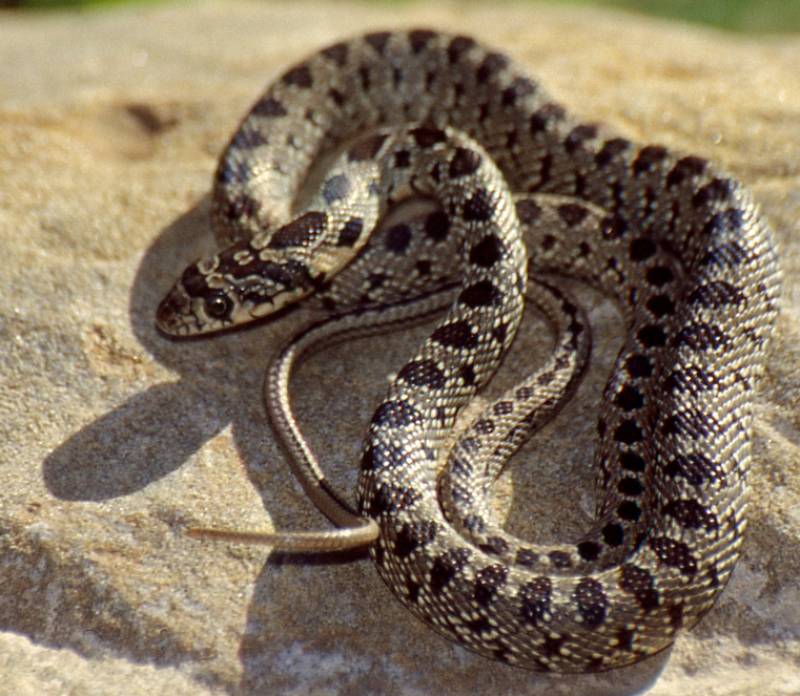
The horseshoe whip snake
As temperatures climb across Spain, there's one type of critter that becomes a lot more active and fills most people with dread: snakes.
While the thought of finding a snake in your garden, garage or on a countryside walk might be enough to make some people jump, experts say there's usually no reason to panic.
Emergency services have issued a reminder that snake sightings naturally increase during the warmer months as reptiles emerge to bask in the sun, hunt for food and look for mates. It's not unusual to spot them in rural areas, near rivers, on hiking trails or even occasionally in residential gardens.
The first piece of advice is simple: stay calm.
Experts stress that most snakes found in Spain are harmless and would much rather avoid people than confront them. In fact, they usually disappear long before anyone gets close.
Spain is home to around a dozen native snake species, but only a small number are venomous. The most well-known are the various species of viper found in different parts of the country. Although their bites can be serious and require medical attention, fatalities are extremely rare.
If you do come across a snake, the recommendation is not to touch it, corner it or attempt to kill it.
Apart from the risk of being bitten, many snake species are protected by law. Snakes play an important role in the ecosystem by helping control rodents and other pests.
If a snake is found inside a building, experts advise keeping a safe distance and, where possible, leaving an escape route open so it can leave on its own. If it doesn't move on or is in a location where it could pose a risk, local emergency services can be contacted for assistance.
One common myth is that snakes will actively chase people. Wildlife experts say this is largely untrue. In almost all cases, snakes are trying to escape rather than attack.
With summer now underway, sightings are likely to become more common across many parts of Spain. So if you spot one sunning itself on a path or slithering through the countryside, the best approach is usually the simplest one: admire it from a safe distance and let it go about its day.
Common snake species found in Spain
- Montpellier snake (Culebra bastarda) – Spain's largest snake, commonly seen in rural areas and scrubland.
- Ladder snake (Culebra de escalera) – A harmless species often spotted in gardens, fields and countryside areas.
- Horseshoe whip snake (Culebra de herradura) – Common in Mediterranean regions and known for its speed.
- Grass snake (Culebra de collar) – Usually found near rivers, lakes and other freshwater habitats.
- Viperine snake (Culebra viperina) – Often mistaken for a viper because of its markings, but completely harmless.
- Lataste's viper (Vipera latastei) – Spain's most widespread venomous snake, found mainly in rocky and mountainous areas.
- Asp viper (Vipera aspis) – Found in parts of northern Spain and the Pyrenees.
- Seoane's viper (Vipera seoanei) – Native to the wetter regions of northern Spain, including Galicia and Asturias.
Image: Wikimedia Commons


See more news about animals in Spain:
OR
Sign up for the Spanish News Today Editors Roundup Weekly Bulletin to get a comprehensive email with all the week’s news for Spain, Murcia, Alicante and Andalucía.
Get a sneak peek – here are a few of our recent Subscription Bulletins:
Discount Special Offer subscription:
36.95€ for 48 Editor’s Weekly News Roundup bulletins!
Please CLICK THE BUTTON to subscribe.